Published: January 2014 · Updated: July 2026 · by arch. Dan Dumitriu · FD.STIL
Office Lighting
Visual comfort for productive working hours. Whether you are designing a home office or a professional workspace, lighting should create an environment that promotes comfort and concentration. The goal is to minimise contrast, eliminate glare, and avoid reflections on computer screens. A well-designed office combines task lighting for writing, reading, and computer work with balanced ambient lighting and, optionally, accent lighting to highlight the objects that define your workspace.
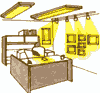
Ambient lighting
A practical solution is a pair of LED ceiling fixtures, providing even, well-distributed illumination throughout the room. For a more distinctive interior, a generously sized chandelier fitted with lampshades can become the focal point above the desk. Whatever the choice, one principle remains essential: light should come from behind or beside the user — never directly in front, to prevent reflections on the monitor.

Task lighting
An adjustable desk lamp provides focused illumination for writing and keyboard work. Position it so that the beam does not shine directly onto the computer screen. When working in the evening, always keep ambient lighting switched on as well. A strong contrast between a bright monitor and a dark room can quickly lead to eye fatigue.
Accent light
Diplomas, awards, photographs, personal mementoes, and indoor plants can all be highlighted with adjustable track spotlights aimed precisely where you want to draw attention. One final detail that is increasingly important in the age of video conferencing: a thoughtfully illuminated office not only improves the way you work — it also looks exceptional on camera.
For this room
Search the collections · 640 models, 14 styles

